
Your team presents differently. The brand feels inconsistent.
Every person has their own style. The result is a patchwork, some compelling, some not. There's no shared baseline, no shared language, no shared standard.
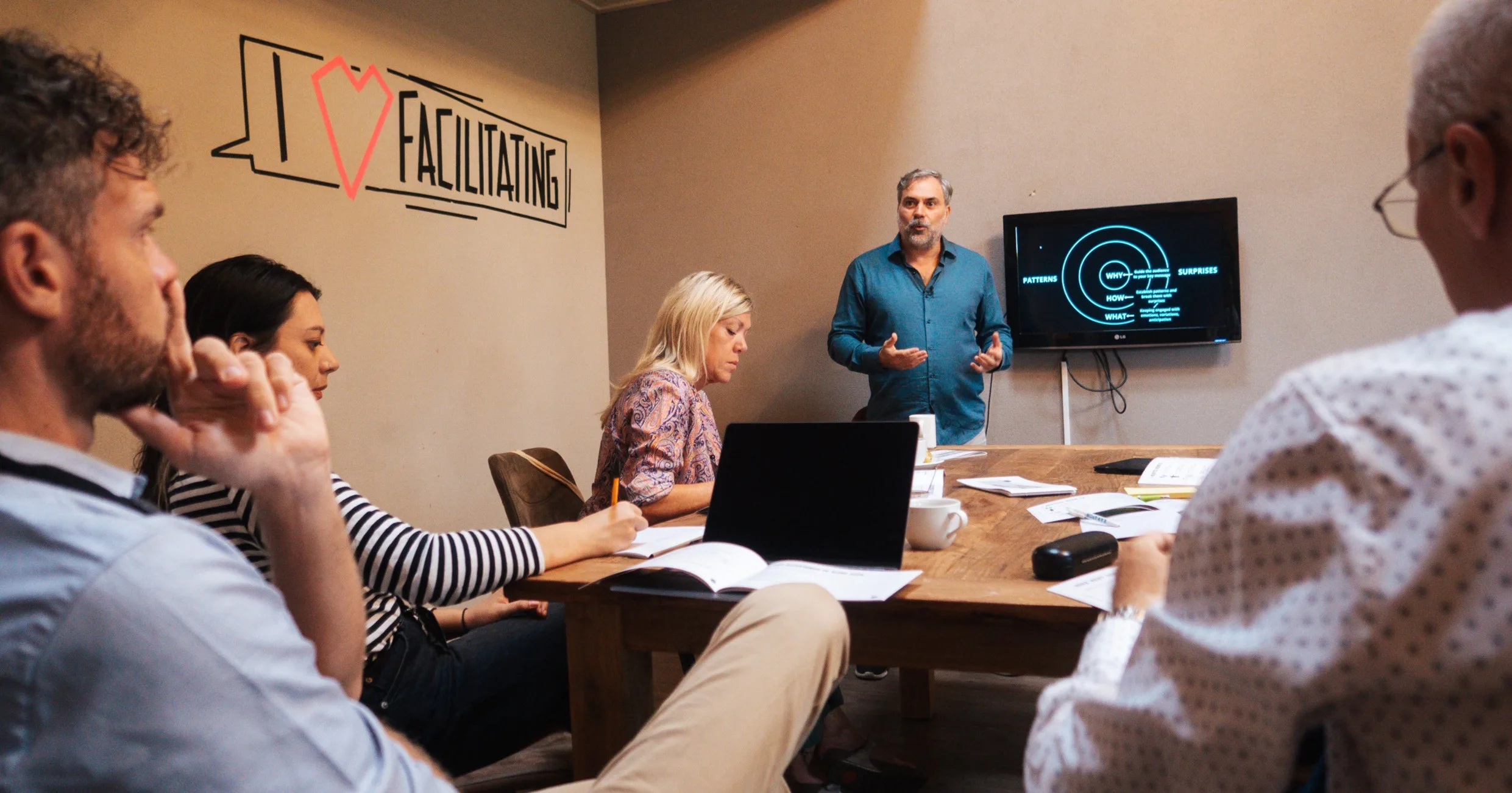
A shared communication method across your team creates compounding returns. One good presentation leads to another.
Every person has their own style. The result is a patchwork, some compelling, some not. There's no shared baseline, no shared language, no shared standard.
The same two or three people present every time. The rest can’t really fill in for them. Confidence and skills are unevenly distributed, but it doesn't have to be.
Each person knows their part. Yet together, the handoffs are rough, the narrative breaks, the client feels the disconnect. Group communication is a skill that needs to be built together.
You've done this before: a one-day workshop with great energy, only to be forgotten by the following week. The IS Method is designed for lasting behavior change, not one-day inspiration.
A team that communicates with one shared structure is a team that performs at a different level.
Three formats for teams at different stages. All built on the same IS Method.
The IS Method core framework in a fast-paced engaging format. Immediate practice, direct feedback, getting the foundation of speaking in record time.
Highly adaptive: duration from 2 to 4h; can accomodate up to 200+ partipants.
Ideal for team-building or seminars
Learn more →Comprehensive, engaging group training for your team: message, structure, delivery, and stage presence. Filled with activities and live practice. The fastest way to shift team communication as a whole.
Includes a follow-up refresher after 3 weeks to anchor skills.
Ideal for lasting transformation
Learn more →A bespoke program built around your organization's specific context and objectives. Ideal for strategic projects, annual gatherings, tradeshows preparation, pitch training or cohort-based initiatives.
Custom structure and goals, on-site or hybrid format, measurable outcomes and follow-up included.
Custom to your needs
Learn more →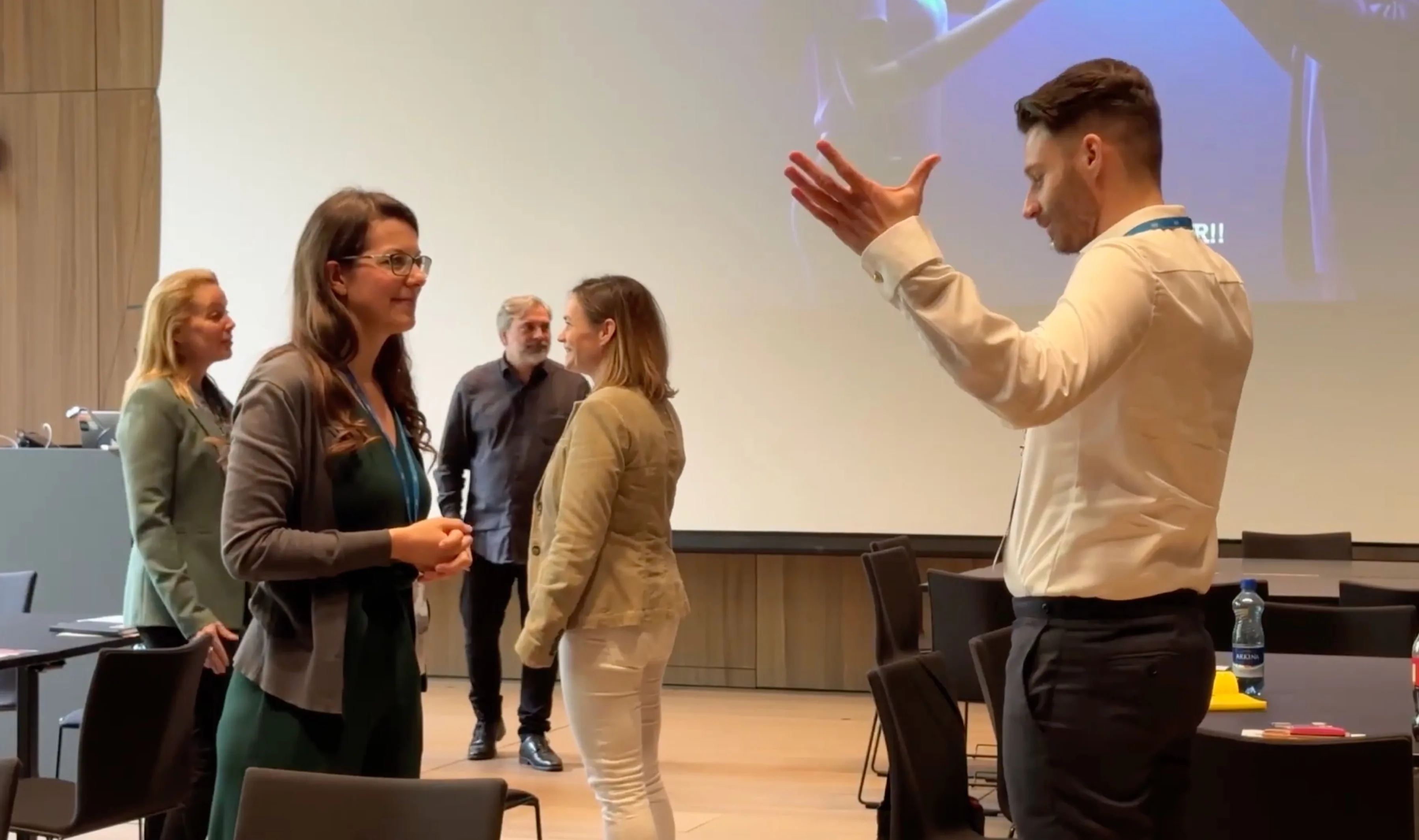
The TSIS program deployed the IS Method across five consecutive cohorts, each of 48 participants. The goal was not just training — it was building a shared communication culture across the organization. By cohort five, the language was already there before the workshop began.
"I've seen my team use the techniques weeks after the course, I am proud of them."
★★★★★"Super useful, and the team spirit throughout made it even better. Looking forward to the rest of the program."
★★★★★"Very informative. The fact that we participate and apply what we learn, not just listen, is what makes the class significantly more engaging. Learning and applying at the same time helps a lot."
Book a free 30-minute call. We'll identify the right format and design it around your team's specific context.